What the Corridor Knows: A Repeatable Field Method for Group Board Visits

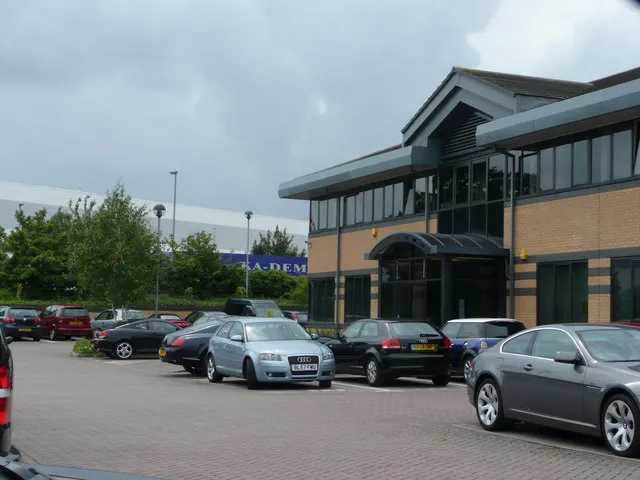
Photo: Scottish Government, OGL 3, via Wikimedia Commons
A site visit is often described as the board's chance to see the business for itself. In practice, it can become a carefully staged walk from reception to meeting room, with a presentation at each end. The board leaves with impressions; the group gains little durable evidence. For a UK group with multiple subsidiaries, depots, plants or service centres, that is a missed assurance opportunity. The aim is not to turn directors into inspectors. It is to make visits repeatable enough that what one site reveals can be compared with another, and disciplined enough that the board can distinguish a local irritant from a group-wide weakness.
Start with a question, not an itinerary
The most useful visits begin before anyone travels. The board or its audit committee should agree two or three questions linked to the group risk register. These might concern contractor control, maintenance backlog, shift-handover quality or the treatment of near-miss reports. The questions should be specific enough to test, but open enough to allow surprise.
Site selection should follow risk and relevance, not hospitality. A group may visit its largest site every year because it matters, but it should also visit smaller or less convenient locations where controls are less visible. Before the visit, ask local management for a short list of artefacts rather than a polished presentation: the current action tracker, a sample of shift handovers, the training matrix, the latest incident review and the contractor induction record. The request itself tells the site that the visit is about evidence, not performance.
Read the physical environment
A walk around the operating area remains one of the few ways to test whether written controls are lived. Directors should look for the ordinary signals: housekeeping, signage that is current rather than faded, barriers in the right place, consistent use of protective equipment, clear storage, adequate lighting and controlled access. None of these proves a control is effective on its own, but a pattern of small gaps is evidence of something worth understanding.
It helps to walk the route an employee would take, not only the route a host would choose. Notice where pedestrians and vehicles meet, where temporary storage has become permanent, and where notices have been laminated so many times that the date has disappeared. Ask why a particular arrangement exists. The answer may reveal a sensible local adaptation or an unresolved risk. Record both.
Listen at three depths
Conversation is the heart of a site visit, but it needs structure. Directors should aim to speak at three levels: the accountable local leader, the front-line supervisor and a small cross-section of staff who do not normally present to visitors. The first conversation tests ownership and escalation. The second tests whether procedures survive the pressure of the shift. The third tests whether people know what to do when something goes wrong.
Use open questions. Ask what has changed recently, what gets in the way of doing the job safely, what would cause someone to stop work, and when the last near miss was discussed. Avoid leading questions that invite a yes or no. Explain the purpose plainly: the board is there to understand how the system works, not to assign blame in the room. Where confidentiality is promised, it must be honoured.
Examine artefacts, not assurances
Assurance is strongest when it can be traced. Ask to see the record behind the claim. If training is described as complete, sample the matrix and follow one name through to evidence. If corrective actions are said to be closed, inspect the closure note and ask who verified it. If contractors are managed, look at the induction record and the permit-to-work process for a recent job.
This is not a test of memory. It is a test of whether records are usable. A tracker that nobody can explain, a policy with no local owner or an incident log with no learning attached are all evidence of a control that may exist in form but not in function. Directors should sample rather than audit exhaustively, and should say clearly that the visit does not replace internal audit or external inspection.
Record in a common grammar
Evidence becomes useful only when it can be compared. A group should adopt a short field-note template for board visits: site, date, question tested, observation, evidence type, source, confidence, immediate risk, follow-up owner and date. The note should separate what was seen from what was inferred. For example, a missing guard is an observation; a weakened maintenance culture is an inference that requires further evidence.
Positive evidence should be recorded with the same care as gaps. A well-run handover, a clear escalation route or a supervisor who can explain the last corrective action are all useful data points. Photographs may help, but only where site rules permit and where people are not identifiable without consent.
Aggregate before you interpret
The board should not read visits one by one. Findings should be entered into a central pattern register, tagged by theme, entity and control. Over a year, the register can show whether the same issue keeps appearing at different sites, whether one site is an outlier, and whether local fixes are masking a group-wide design problem. The register should feed the risk register, the audit plan and the board's assurance map.
Patterns matter more than anecdotes. A single untidy storage area is a local matter. The same weak contractor induction process at four sites is a group issue. The board should set simple thresholds for escalation and review the register at least quarterly.
Close the loop without choreography
A visit that ends with a thank-you and no follow-up teaches sites that the exercise is ceremonial. Findings should be shared with local management within days, with named owners and realistic dates. The board should see the pattern, not a travelogue. Follow-up should include verification, not merely confirmation that an action has been recorded.
Used this way, a site visit becomes part of an assurance cycle rather than a departure from it. The board's sixth sense is not intuition. It is a disciplined habit of looking, asking, recording and comparing. That habit gives UK group boards something more valuable than a good impression: evidence they can use.